Explore Black Heritage Through These 10 Exhibits at Cincinnati Museum Center.
Powerful Black exhibits at the Cincinnati Museum Center include achievements from inventors and Olympians to the everyday lives of educators and healthcare professionals. Permanent exhibits showcase Black excellence through stories that shaped Cincinnati, the nation, and the world. The museum offers a meaningful space for learning, reflecting, and celebrating Black history and culture.
10 Black Things to See at the Cincinnati Museum Center
James Presley Ball – Cincinnati History Museum (Public Landing)
J.P. Ball, a free Black photographer active since the 1840s, operated several studios in Cincinnati. Known as one of the most in-demand photographers of the era, Ball traveled globally and produced images of everyday Black citizens. Some of the most prominent figures in history photographed include Frederick Douglass and Queen Victoria.
Ball’s photography studio is reproduced today in the Public Landing exhibit at Cincinnati Museum Center.


Granville T. Woods
Known as the “Black Edison,” Granville T. Woods held more than 60 patents in the United States. Woods became the first African American mechanical and electrical engineer following the Civil War. Innovations primarily improved train and streetcar technology, including advancements that made the hazardous third rail safer.
Among the most significant inventions was a method for sending telegraph messages from moving trains. An animated feature about Woods appears in the Object Theater presentation within the Made in Cincinnati exhibit.

Brown Hands Literacy – The Children’s Museum (Kids’ Town Park)
Brown Hands Literacy seeks to educate and empower youth and families about HBCUs while building a love of literacy through Black children’s books.
The organization and the founder, Latoya Turner, are featured in a rotating case in Kids’ Town Park, which includes a selection of Black children’s books.


Advancing Health – Museum of Natural History & Science
Advancing Health explores seven body systems, with each section highlighting both a medical professional and an individual impacted by disease or chronic conditions. Stories reflect how health challenges have shaped daily life and how medical innovations support treatment and care.
Featured Black professionals and individuals include:
- Dr. Conrad Cole, gastroenterologist
- John Bush, respiratory therapist
- Billy, living with asthma
- Journey, receiving weekly blood transfusions;
- Jami Gibson, internal medicine specialist;
- Dr. Lori Crosby, psychologist
- Renia from NAMI Urban Greater Cincinnati.
The exhibition includes mindfulness videos with guidance from professionals such as Tian Philson of Founded Love, Strength and Fitness, and Phil Cunningham of Jamaa Health.


Lockland Wayne High School – Cincinnati History Museum (You Are Here)
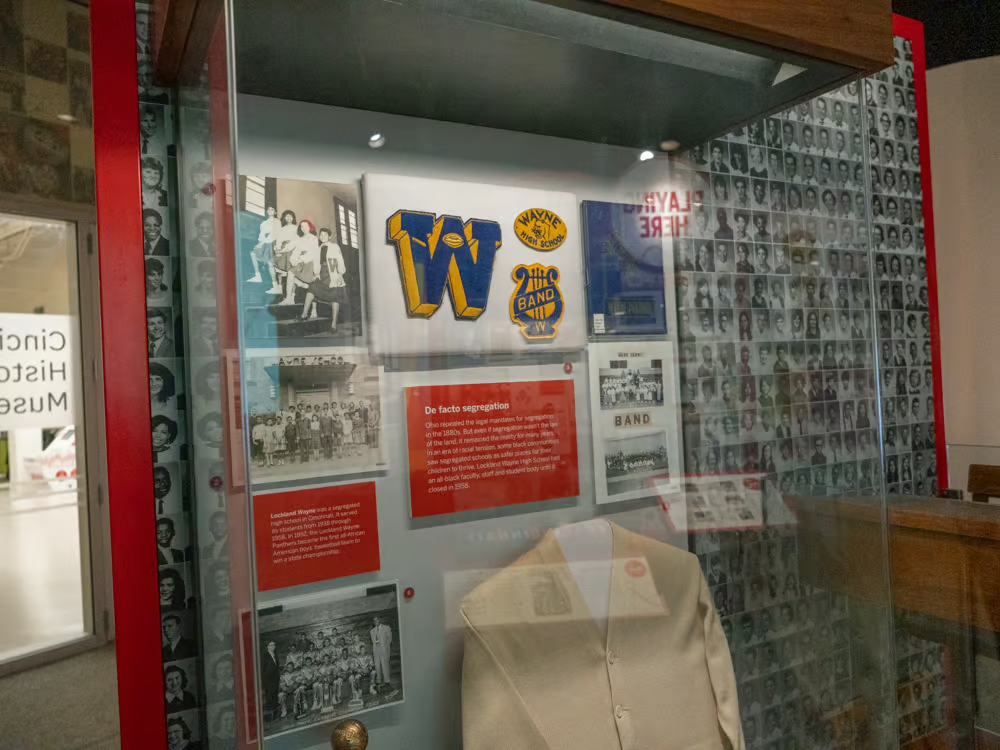
Though segregation was repealed in Ohio in the 1880s, de facto segregation still existed and many Black parents felt safer sending children to segregated schools. Lockland Wayne High School had an all-Black faculty, staff, and student body until closing in 1958. In 1952, the school became the first all-African American boys’ basketball team to win a state championship.
The school is featured in a case in You Are Here.


Pullman Porters – Cincinnati History Museum (Shaping Our City)
After the Civil War, railroad entrepreneur George Pullman began employing African American men. Many of these men were formerly enslaved. The job was to serve white passengers on luxury railroad sleeping cars.
Pullman porters were underpaid, overworked, and faced constant racism. Despite these challenges, the work allowed travel across the country. This mobility helped fuel the Great Migration and contributed to the rise of a new Black middle class.
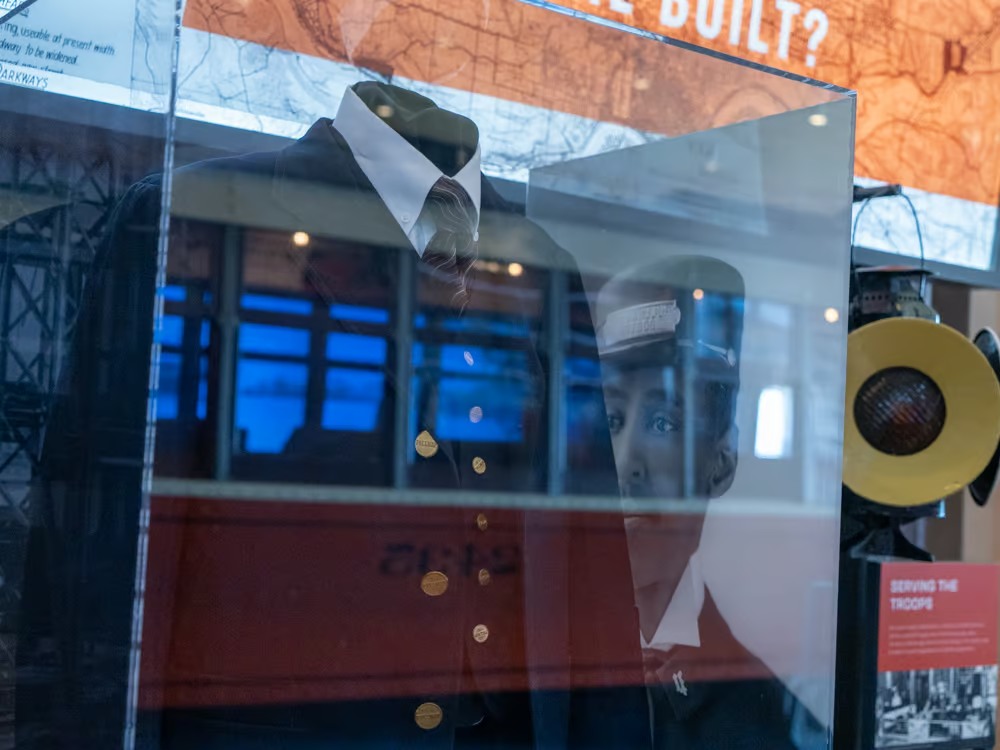
Porters helped launch the civil rights movement by spreading news, experiences, and ideas in Black communities nationwide. A Pullman porter uniform is on display in the Shaping Our City exhibit.

DeHart Hubbard – Cincinnati History Museum (You Are Here)
William DeHart Hubbard was the first African American to win an Olympic gold medal in an individual event. A Walnut Hills High School graduate, Hubbard competed in the 1924 Paralympic Games and won the gold medal in the long jump.
Hubbard is featured in a panel in You Are Here. The Museum Center also has a letter from Hubbard in the collection.


Henry Boyd – Cincinnati History Museum (Made in Cincinnati)
Henry Boyd was an enslaved man in Kentucky who purchased freedom by working contract jobs as a carpenter. After gaining freedom, Boyd moved to Cincinnati in the 1840s. Segregation and racism made finding work difficult during that period.
Boyd took a job as a dock hand. An opportunity arose when a carpenter became ill, and Boyd filled in. That chance led to steady work and eventually enough savings to open a furniture shop.
Boyd designed a bed that was simple to assemble and had no nail or screw holes. This design reduced the risk of bug infestations. The bed also featured self-tightening rails to prevent sagging over time.
A white man helped patent the design, since Black people were not allowed to hold patents. Boyd became one of the most successful Black businessmen of the 19th century. The Cincinnati furniture store had an integrated workforce and spanned three storefronts.
The business was targeted by arsonists three times in the racially divided city.
The Made in Cincinnati exhibit displays one of Boyd’s original beds.


Union Terminal
Originally opened in 1933, when segregation was the law, Union Terminal was an integrated facility for both employees and passengers. During World War II, the USO Troops-in-Transit Lounge served soldiers of every color equally, even as the military remained segregated.
The Museum Center has great historic photos that can be shared.

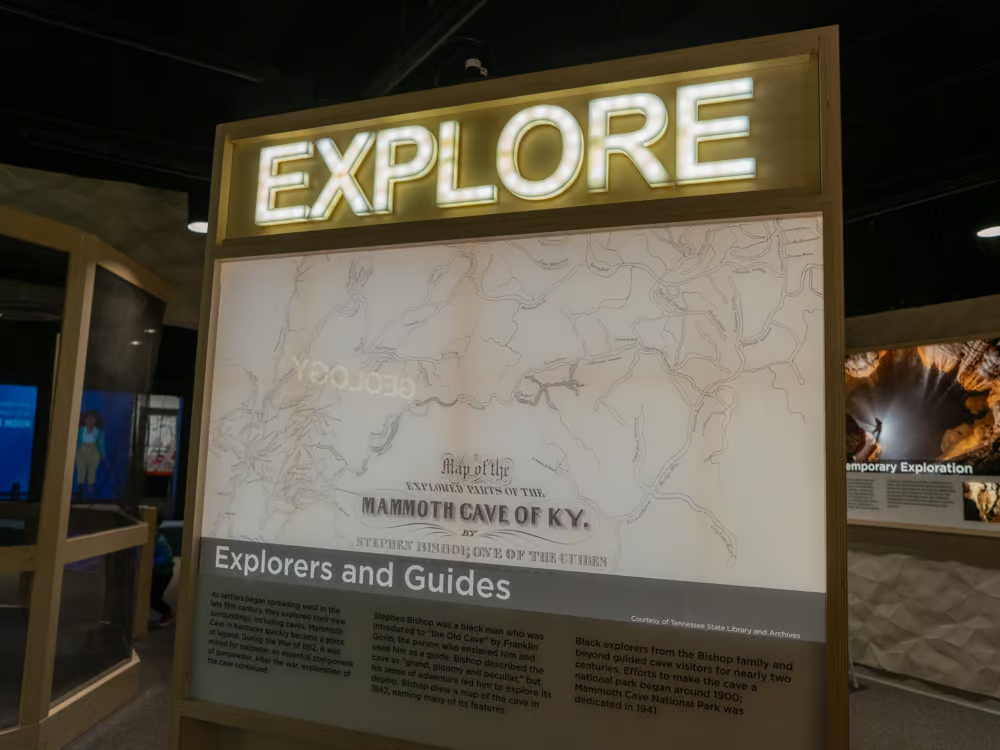
Stephen Bishop – Museum of Natural History and Science (The Cave)
Bishop was an enslaved man in Kentucky who explored and mapped Mammoth Cave in 1842, naming many features. The man who enslaved Bishop used Bishop as a guide, a hazardous job in an unexplored and unknown cave. Black explorers from Bishop’s family and beyond would guide cave visitors for nearly two centuries.
Bishop is featured in a panel outside The Cave, along with a map drawn.

These 10 Black exhibits at the Cincinnati Museum Center showcase generations of innovation, resilience, and cultural impact. Whether viewing historic artifacts, learning about trailblazers in science, or honoring lives shaped by struggle and achievement, each exhibit offers a powerful perspective. Plan a visit and experience firsthand how Black history is preserved, uplifted, and celebrated in every corner of the museum.
The Voice of Black Cincinnati is a media company designed to educate, recognize, and create opportunities for African Americans. Want to find local news, events, job postings, scholarships, and a database of local Black-owned businesses? Visit our homepage, explore other articles, subscribe to our newsletter, like our Facebook page, join our Facebook group, and text VOBC to 513-966-3328.