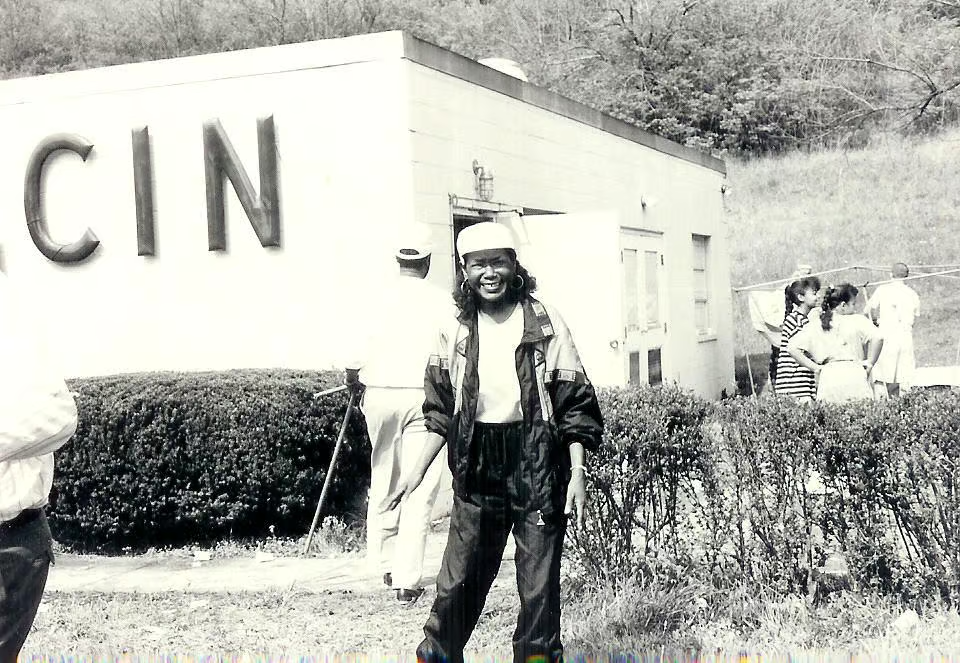
Juneteenth, celebrated as ‘Emancipation Day’ or ‘Jubilee Day,’ symbolizes freedom and resilience in African American history.
Juneteenth history as presented by Dr. Eric R. Jackson, Professor of History and Black Studies at Northern Kentucky University.
Juneteenth, celebrated June 19, commemorates 1865 when enslaved African Americans in Galveston, Texas, were informed of the newly announced order.
The occasion came two and a half years after the Emancipation Proclamation, a turning point in the fight for equality.

The Road to Emancipation
The Emancipation Proclamation (January 1, 1863)
Issued by President Abraham Lincoln, the executive order declared the freedom of all enslaved people in Confederate-held territory. Lincoln proclaimed, “All persons held as slaves… shall be then, thenceforward, and forever free.”
The 13th Amendment (January 31, 1865)
The 13th Amendment to the Constitution stated, “Neither slavery nor involuntary servitude… shall exist within the United States.”
Juneteenth (June 19, 1865)
General Gordon Granger arrived in Galveston, Texas, with 1,800 federal troops and read General Order No. 3, informing the people of Texas that enslaved people were free. The order emphasized the absolute equality of personal and property rights between former masters and enslaved people.

Juneteenth Celebrations
Early Juneteenth Celebrations
Juneteenth commemorations began in 1866, initially known as “Jubilee Day.” Early observances were local events primarily celebrated in Texas and parts of Oklahoma, Arkansas, and Louisiana. By the 1890s, Juneteenth was primarily celebrated as Jubilee Day, reflecting its roots in emancipation and freedom.
In the early 1900s, celebrations remained primarily local, with prominent events occurring in Texas, southeastern Oklahoma, southwest Arkansas, and Louisiana. The gatherings allowed African Americans to commemorate African American history and culture. By the mid-1930s, Juneteenth had evolved, becoming broader in scope and significance.
Dallas, Texas, saw significant contributions from African American educator Antonio M. Smith. Smith created a local and traveling Juneteenth exhibit, fostering a national celebration within African American communities. The celebrations, partly funded by a federal grant, were embedded in the NAACP’s “Double-V” Campaign during World War II, which promoted victory against fascism abroad and racism at home.
In the 1950s and 1960s, Juneteenth celebrations honored African American military veterans. The events highlighted the contributions of African Americans in the armed forces and broader civil rights issues.

Related Article: Cincinnati’s Black History
Modern Juneteenth Celebrations
From the 1970s onward, Juneteenth celebrations spread across various cities and states, extending beyond the borders of the United States to parts of the Caribbean, Europe, and Africa. The period has seen a revival and expansion of Juneteenth activities, with observances occurring from June to September in different locations.
Juneteenth became particularly significant during the Civil Rights Movement, symbolizing the ongoing struggle for racial equality and justice. Celebrations during this time highlighted the progress and remaining work in the civil rights fight.
In the 2000s, Juneteenth was increasingly linked to contemporary movements advocating for African American rights, including the Black Lives Matter movement. The linkage emphasizes Juneteenth’s enduring relevance in the broader context of social justice and equality.
Juneteenth Celebrations in Cincinnati
Cincinnati has been at the forefront of Juneteenth celebrations, consistently hosting events since the holiday’s early adoption. The city’s commitment to honoring the significant day has been evident since the celebration started in 1988, spearheaded by Juneteenth Cincinnati and its founder, Lydia Morgan.
The Juneteenth Festival in Eden Park has grown from a neighborhood event in Kennedy Heights to a major city-wide celebration. The two-day celebration features live music, family activities, and cultural experiences, attracting thousands of participants.
Cincinnati’s Juneteenth celebrations have grown beyond the main festival to encompass a variety of events throughout the city. The Urban League of Greater Southwestern Ohio hosts its Juneteenth celebration, offering a unique perspective on the holiday and its significance to the African American community.
The National Underground Railroad Freedom Center (NURFC) also organizes special events to commemorate Juneteenth. The NURFC’s Juneteenth events often draw visitors from across the region.
Additionally, the “Wade on the Water” celebration at Smale Riverfront Park has become a popular attraction, bringing the festivities to the scenic Ohio River waterfront. Down the street, The Banks Juneteenth Block Party started in 2019. The party focuses on celebrating families and the community.
The Juneteenth Festival in Eden Park offers various activities, including performances on two stages, a supervised children’s area, historical reenactments, health screenings, art exhibitions, and various food vendors.
New additions like Brazilian performers and the inaugural Juneteenth parade demonstrate the celebration’s continued growth and inclusivity.
The celebrations demonstrate Cincinnati’s commitment to honoring Juneteenth and fostering a deeper understanding of African American history and culture.

Opal Lee Campaigns for Juneteenth Law
Opal Lee, an activist and former teacher from Fort Worth, Texas, was pivotal in making Juneteenth a national holiday. In 2016, Lee campaigned for Juneteenth to be recognized as a federal holiday, walking from Fort Worth to Washington, DC.
The efforts of activists and organizations ultimately led to Juneteenth being established as a federal holiday in 2021 when the President signed the Juneteenth National Independence Day Act.
Lee, now referred to as the “Grandmother of Juneteenth,” played an instrumental role in amplifying the significance of Juneteenth and its importance as a celebration of freedom and perseverance in African American history and culture.
Related Article: African American Museums
The Legacy of Juneteenth
Today, Juneteenth reminds the country and the world of the resilience and perseverance of African Americans and the ongoing fight for freedom and equality. Juneteenth is more than just a celebration of the end of slavery; The Holiday is a day to honor the struggles and triumphs of African Americans throughout history.
For further information, check out A Conversation on Juneteenth, Featuring Dr. Annette Gordon-Reed:
Juneteenth Recommended Reading

Isabel Wilkerson, The Warmth of Other Suns
The Pulitzer Prize-winning book chronicles the decades-long migration of Black citizens who fled the South for northern and Western cities in search of a better life from 1915 to 1970. Wilkerson’s powerful narrative immerses readers in the lives of three individuals and provides a compelling study of one of the biggest underreported stories of the 20th century.

Annette Gordon-Reed, On Juneteenth
A leading scholar of the Jeffersons provides a personal and historical exploration of Juneteenth, which has become one of the most prominent celebrations of emancipation from slavery in the United States. Gordon-Reed offers a historian’s view of the country’s long road to Juneteenth, recounting its origins in Texas and its eventual embrace by Black Americans nationwide.

Francis E. Abernethy, Juneteenth Texas
Provides a comprehensive history of Juneteenth in Texas. It details how Union troops arrived in Galveston on June 19, 1865, and announced the end of slavery over two years after the Emancipation Proclamation. The book explores how Juneteenth celebrations emerged and spread across Texas in the late 19th century.

Henry Louis Gates Jr., Stony the Road
Gates, a renowned Harvard scholar, presents a sweeping view of African Americans’ complicated journey from 1619 to the modern era. Drawing on a wealth of scholarship, the book offers an essential tour through significant events like the Middle Passage, Reconstruction, the Harlem Renaissance, and the Civil Rights Movement.

Alicia Garza, The Purpose of Power
As a co-founder of Black Lives Matter, Garza provides a powerful and deeply personal call to action. The Black female author shares searing accounts of the movement’s beginnings, offering insights on Black history, anti-Black racism, and racial justice. Garza makes a compelling case for transformative change through movements built on Black joy.
Recognizing Dr. Eric R. Jackson’s Contribution
Eric R. Jackson holds a doctorate from the University of Cincinnati and is a professor of history and Black studies in the Department of History and Geography at Northern Kentucky University. Jackson teaches American and African American history/studies, race relations, and peace studies courses.
As an expert in Black Studies, Jackson has over 50 publications, including articles in such journals as Africology: The Journal of Pan African Studies, Journal of African American History, and Journal of World Peace.
The Voice of Black Cincinnati is a media company designed to educate, recognize, and create opportunities for African Americans. Want to find local news, events, job postings, scholarships, and a database of local Black-owned businesses? Visit our homepage, explore other articles, subscribe to our newsletter, like our Facebook page, join our Facebook group, and text VOBC to 513-966-3328.
Images provided by AdobeStock, Dr. Eric R. Jackson, and Chandler West.